
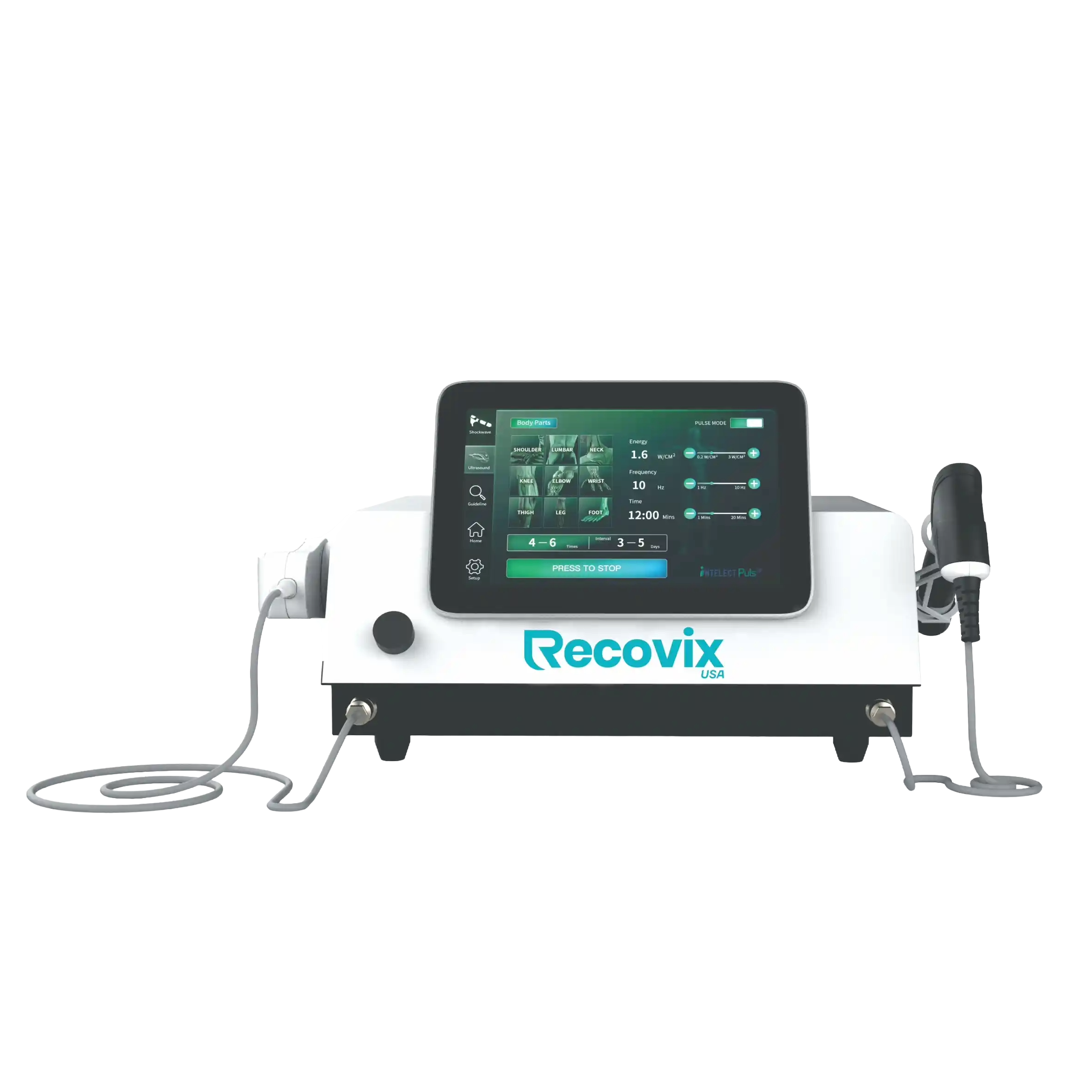
ULTRASOUND THERAPY MACHINE
Precise Treatment
20000+ Happy Customers
Life Time Service Support
Ultrasound Therapy Machine Specs
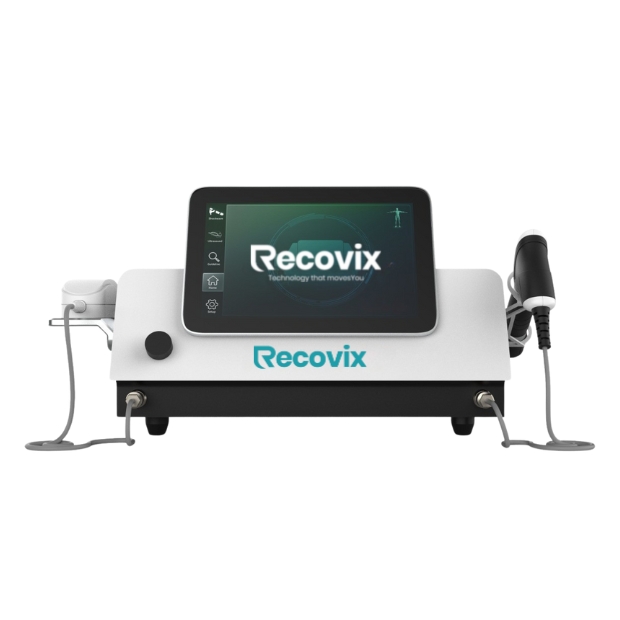
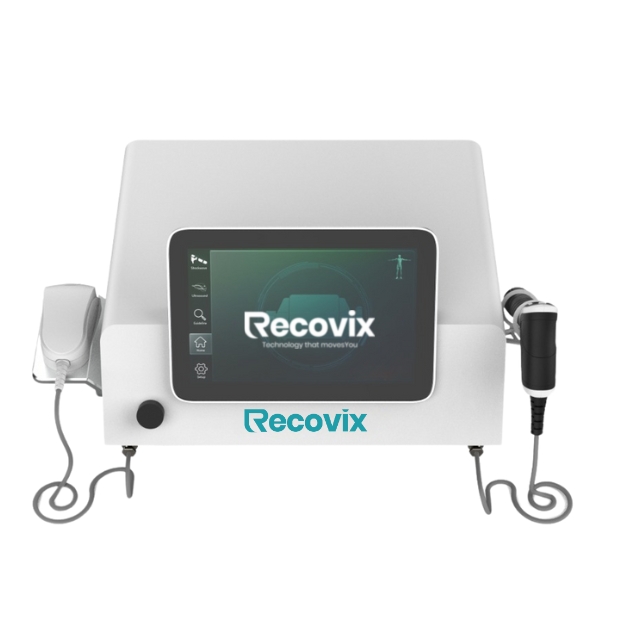
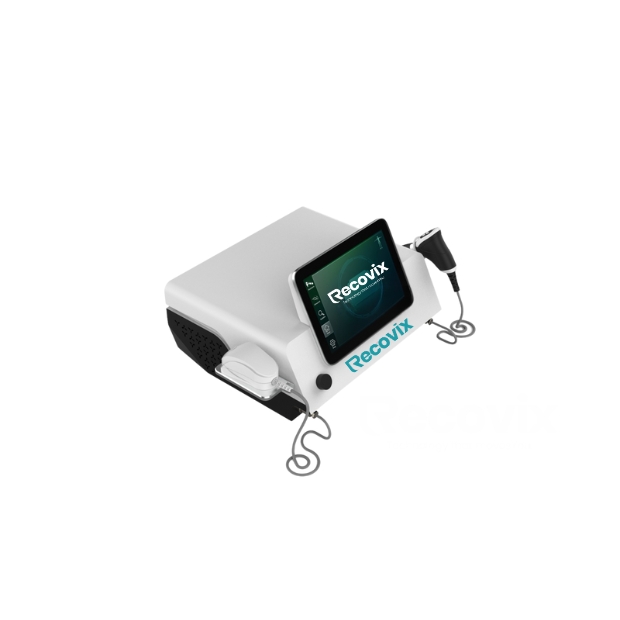
The overall of US1
- The US1 is the latest innovation, combining shockwave therapy with mechanical vibration therapy to address both chronic pain and acute conditions.
- The shockwave applicator is equipped with three types of treatment tips designed for pain management, spine issues, and fascia treatment, while the mechanical vibration function targets anti-inflammatory effects.
- This new version of the shockwave therapy machine offers faster, more efficient treatments with deeper tissue penetration, enhanced by deep vibration therapy.
Why choose US1?
- The US1 is widely used in orthopedics. In addition to treating various tendon and bone pathologies, it is also effective for muscle-related disorders.
- It effectively addresses a range of conditions, including myofascial pain, muscle pain, carpal tunnel syndrome, ulcers, lower back pain, arthritis, and tendonitis.
- It also provides relief for conditions such as calcaneal spurs, primarily through its potent anti-inflammatory effects.
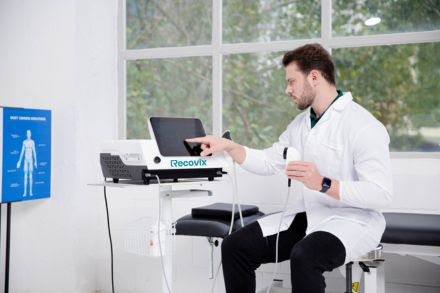
Radial Shockwave Therapy Machine
- Radial shockwave therapy is a method for the treatment of orthopedic disorders.
- A projectile accelerated in the handpiece generates a mechanical pressure wave, which is transferred to the human body by an applicator head, radiating out into the tissue.
- The mechanical energy is absorbed by the tissue and decreases as the distance from the application site increases.
- The mechanical stress triggers reactions in the tissue that have a positive influence on a wide range of orthopedic and neurological conditions, especially in radial shockwave therapy for orthopedic disorders, improving recovery and reducing pain.
Therapeutic Ultrasound Therapy
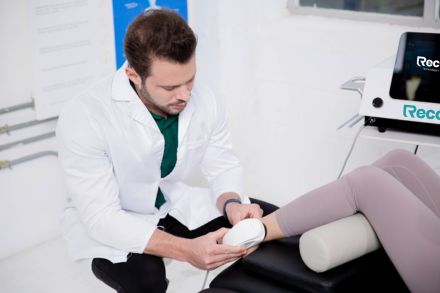
- Ultrasound therapy is a non-invasive treatment method widely used for pain management, especially joint pain.
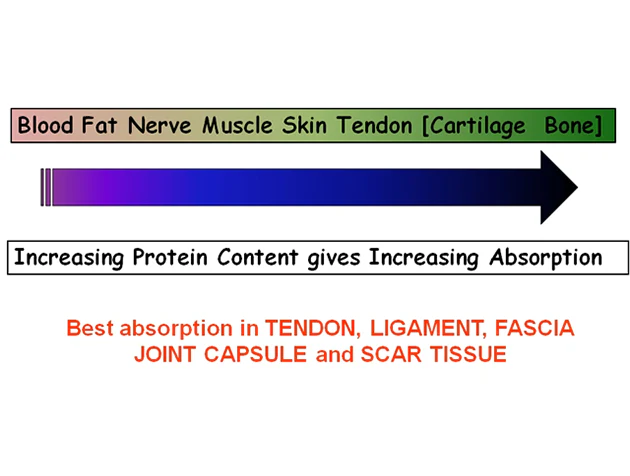
- It uses sound waves to generate deep heat in tissues, promoting healing and reducing inflammation.
- Ultrasound’s energy penetrates deep into tissues, targeting affected areas and relieving discomfort.
- Ultrasound treatment for joint pain is a highly effective treatment method that can accelerate the healing process, enhance tissue flexibility, and improve mobility, making it an excellent choice for patients with chronic joint diseases.
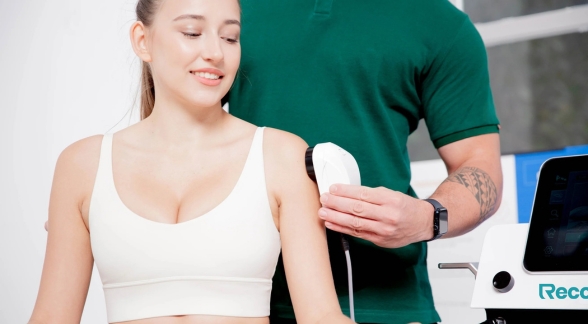
REAL PICTURES
- ODM & OEM would be easy to achieve
- Appearance change, like:
– Logo
– Operating system background
– Outlook adding
– Print
– Language
ACCESSORIES
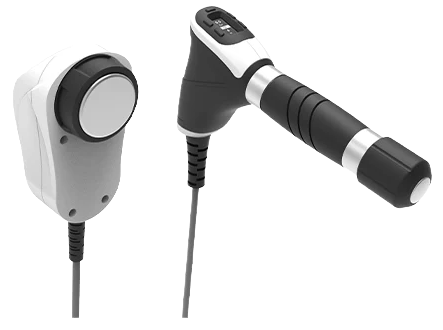
- Digital Shockwave Applicator:
– Energy: 1–10 Bar
– Frequency: 1–21 Hz
– Transmitters: 13 PCS
– 6 PCS for pain management
– 4 PCS for spine specific
– 3 PCS for fascia specific
● Mechanical Vibration Therapy:
– Power: 3W/CM²
– Frequency: 1 MHz
Therapeutic Ultrasound Therapy Benefits
Remodelling of the scar tissue in that it appears to be capable of enhancing the appropriate orientation of the newly formed collagen fibres
- Tissue healing
- Anti-inflammation
- Fracture repair
- Wound healing
- Speed the rate of healing
- Enhance the quality of the repair
- Enhance tissue fluid interchange
- Effect tissue mobility
- Restore the continuity of the damaged tissue
Mechanical shockwave
- Non-Invasive Shockwave therapy
- Tennis elbow
- Calcific tendonitis of the shoulder
- Golfer’s elbow
- Trigger point treatment
- Pseudarthrosis (non-union)
- Greater trochanteric pain syndrome
- Patellar tip syndrome
- Medial tibial stress syndrome
- Plantar fasciitis
- Achilles tendinopathy
- Sex life improvement
- Fat reduction
ADVANTAGES
- Non-Thermal
– Easy to accept - Best Result
– Mechanical vibration & Mechanical wave
– Upgraded software - Professional Guideline
– No Consumable
– No downtime
Have Questions?
Everything You Need to Know
01 What is posture analysis using AI?
Posture analysis using AI is a technology-driven clinical assessment where artificial intelligence scans and maps a patient's body in real time to evaluate their skeletal alignment, muscle balance, and postural deviations - without any radiation, physical contact, or lengthy manual measurement. Unlike traditional observation-based assessment, an AI posture analysis system captures precise data points across the full body simultaneously, then generates a detailed 3D report showing current posture, ideal posture, and the risk of worsening if left unaddressed. At RecovixUSA, our MotiPhysio system does exactly this - giving clinicians a measurable, objective baseline in under 30 seconds that would otherwise take 15–20 minutes to gather manually. Buy AI 3D Posture Analyzer →
02 Is there AI-based muscle imbalance detection?
Yes. AI-based posture systems like MotiPhysio can detect muscle imbalance patterns by analyzing asymmetries in body positioning - such as uneven shoulder height, lateral spinal deviation, pelvic tilt, and leg length discrepancies - all of which are reliable indicators of underlying muscular imbalance. While it does not directly measure muscle fiber strength, the postural compensation patterns it identifies correlate strongly with overactive and underactive muscle groups. This allows physiotherapists to design targeted correction programs based on data rather than guesswork, making treatment far more precise and effective from the very first session.
03 Can it measure range of motion (ROM)?
The MotiPhysio system is primarily designed for static postural and skeletal alignment analysis rather than dynamic ROM testing. However, the postural data it captures - including spinal curvature angles, joint positioning, and body symmetry - provides strong foundational insight that complements ROM assessments carried out by the clinician. Many RecovixUSA clinic partners use the 3D posture scan as the first step in a broader assessment workflow, pairing it with manual or goniometer-based ROM testing for a complete clinical picture. More about AI 3D posture analyzer →
04 What kind of space setup is required in the clinic?
Very minimal. The MotiPhysio system is designed with real-world clinic constraints in mind. You need a clear standing area of approximately 1.5 to 2 meters in front of the device for the patient to stand in a natural posture position. The device itself is compact and can be placed against a wall or in a corner when not in use. No dedicated room or special lighting conditions are required - it works in standard clinic lighting. This makes it one of the most practical diagnostic tools for clinics of all sizes, from solo practitioner setups to multi-room hospital physio departments. Upgrade your clinic space with MotiPhysio physiotherapy solutions. →
05 How long does a full posture assessment take?
The scan itself takes under 30 seconds. From the moment the patient steps in front of the device to the point where the full 3D posture report appears on screen, the entire process is typically completed in 1 to 2 minutes including setup. The clinician can then spend an additional 5 to 10 minutes walking the patient through the report - explaining their postural deviations, showing the ideal posture comparison, and discussing the recommended treatment approach. This makes it completely practical to include in a standard first consultation without disrupting your clinic schedule.
06 Can it be used for sports injury analysis?
Absolutely. Sports injuries are often the direct result of postural imbalances and biomechanical compensations that develop over time - and the MotiPhysio system is highly effective at identifying these root causes. For athletes, a 3D posture scan can reveal asymmetries in shoulder alignment, hip rotation, and spinal loading that increase injury risk in specific sports movements. Coaches, sports physiotherapists, and performance trainers use it both pre-season to establish a baseline and post-injury to track recovery and return-to-play readiness. It adds an objective, data-backed layer to sports injury assessment that traditional observation simply cannot match. Upgrade your sports rehab with MotiPhysio solutions →
07 Can it track posture improvement over multiple sessions?
Yes - and this is one of its most powerful clinical features. Every scan is stored in the patient's profile, allowing clinicians to compare results across sessions side by side. Patients can visually see how their posture has shifted from Session 1 to Session 6, for example - the degree of spinal curve correction, shoulder leveling, or pelvic alignment improvement. This progress tracking does two things: it validates the effectiveness of your treatment plan and it dramatically improves patient compliance and motivation. When patients can see measurable improvement with their own eyes, they stay committed to the rehabilitation process. Monitor posture improvement with MotiPhysio technology →
08 Is it suitable for physiotherapy clinics with limited space
Yes, it is specifically designed for this. The MotiPhysio unit has a small footprint and requires only a clear 1.5–2 meter standing zone in front of it - no extra room, no structural changes, and no permanent installation required. It can be moved, repositioned, or stored easily. Whether you operate a single-room clinic, a home visit setup, or a compact urban practice, the system integrates without disrupting your existing floor plan. This is one of the key reasons it has been adopted in over 2,200 centers across 70+ countries - it fits the way real clinics actually work. Get compact posture analysis tools with MotiPhysio →
09 How does it help in reducing manual measurement errors?
Traditional postural and biomechanical assessments rely heavily on the clinician's visual judgment, which - even with experience - is inherently subjective and prone to inconsistency between practitioners. The MotiPhysio system eliminates this by replacing visual estimation with AI-computed measurements. Joint angles, spinal curvature, body symmetry, and postural deviations are all calculated digitally from actual scan data, producing consistent, repeatable results every time regardless of who is operating the device. This not only improves diagnostic accuracy but also creates a defensible, documented clinical record that supports treatment planning, insurance documentation, and patient communication. Upgrade to AI-based posture assessment with MotiPhysio →
| Specification | Details |
|---|---|
| Product Name | INTELECT PULS 50 |
| Technology | Shockwave therapy with Mechanical Vibration Therapy |
| Shockwave Energy | 0.5–10 Bar |
| Frequency | 1–21 Hz |
| Shocks | 100–8000 |
| Applicator Heads | 13 PCS |
| ULTRASOUND THERAPY | |
| Energy | 0.3–3W/cm² |
| Frequency | 1–21 Hz |
| Power | 1 MHz |
| Duration | 1–20 minutes |
Purchase Inquiry
Please leave your contact information for demonstarions and other inquiries.